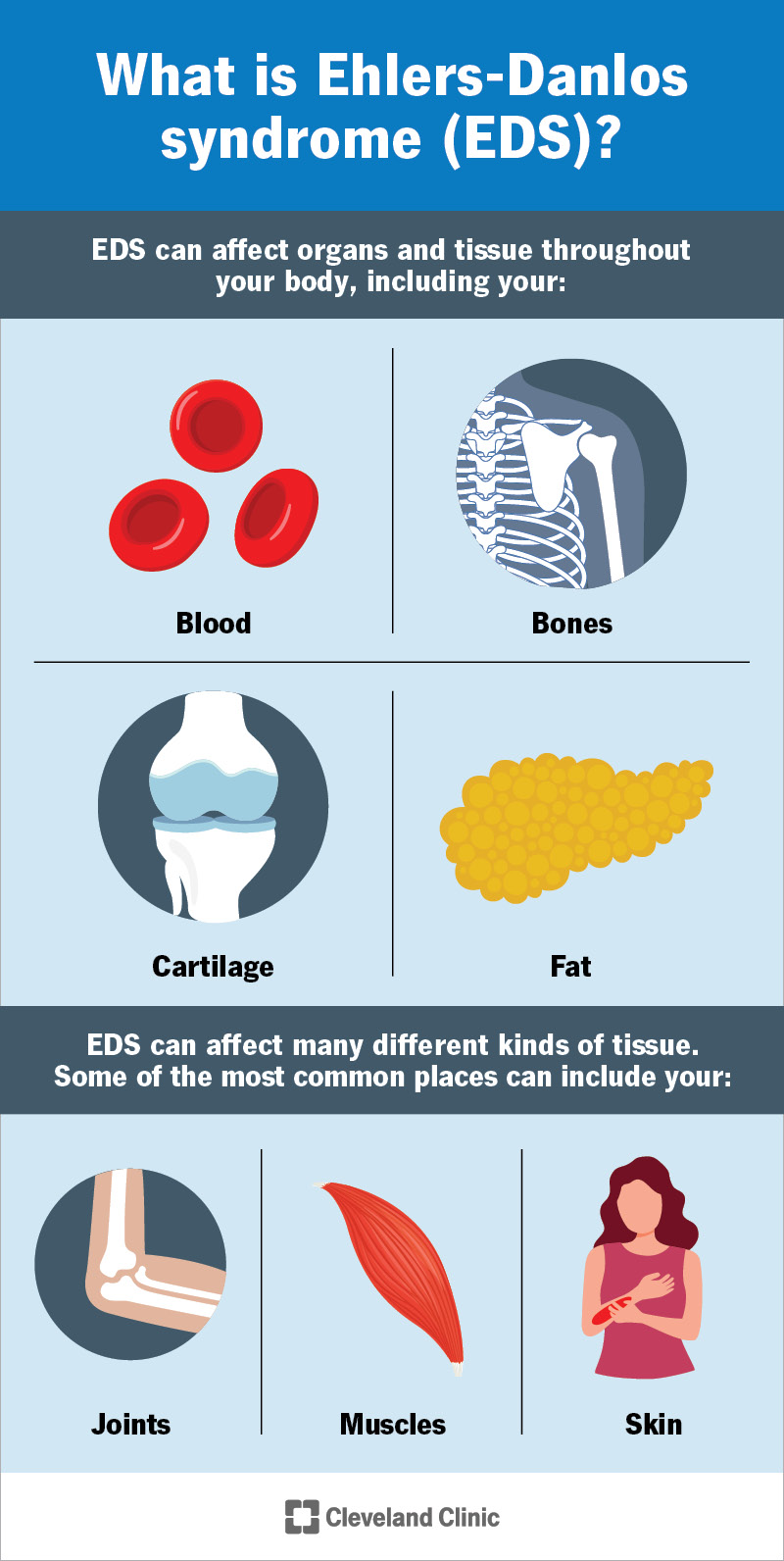
Ehlers-Danlos syndromes (EDS) represent a complex and often misunderstood group of inherited connective tissue disorders. Characterized by a range of symptoms that can affect nearly every system in the body, EDS results from faulty genes impacting the strength and integrity of connective tissues—the very 'glue' that holds our bodies together. These vital tissues provide support and elasticity to skin, tendons, ligaments, blood vessels, internal organs, and bones. While there are 13 recognized types of Ehlers Danlos Syndrome, each with its own specific genetic mutation and clinical presentation, several core symptoms frequently overlap. However, understanding the distinct features of the most common types—hypermobile, classical, and vascular—is crucial for accurate diagnosis, effective management, and ultimately, improving the quality of life for those affected.
Understanding the Foundation: What is Ehlers Danlos Syndrome?
At its core, Ehlers Danlos Syndrome is a genetic condition that weakens connective tissue, leading to a spectrum of challenges. From birth or early childhood, individuals may experience symptoms like loose joints, joint pain, unusually stretchy or velvety skin, and abnormal scar formation. These issues arise because the genes responsible for producing collagen—a key protein in connective tissue—are faulty. This makes the tissue less resilient and more prone to damage, explaining the wide array of physical manifestations.
The impact of EDS can vary dramatically, from relatively mild discomfort to severely disabling or even life-threatening complications. While some individuals may only notice a few symptoms, others contend with a complex interplay of issues affecting their musculoskeletal, cardiovascular, gastrointestinal, and autonomic nervous systems. Recognizing these diverse presentations is the first step towards an accurate diagnosis, which can often be a long and challenging journey due to the rarity and varied nature of the condition. For a deeper dive into the broader implications, you might find our article Ehlers-Danlos Syndromes: Understanding This Connective Tissue Disorder insightful.
Hypermobile Ehlers Danlos Syndrome (hEDS): The Most Common Variant
Hypermobile EDS (hEDS) stands out as the most prevalent type of Ehlers Danlos Syndrome, characterized primarily by generalized joint hypermobility. Unlike other types, a specific genetic marker for hEDS has yet to be identified, meaning diagnosis relies heavily on a detailed medical history and a thorough physical examination, often using criteria like the Beighton score to assess joint flexibility.
- Joint Hypermobility and Instability: Individuals with hEDS often possess an extraordinary range of joint movement, allowing them to bend in ways others cannot. While this might seem like a party trick, it comes at a significant cost: joints are frequently loose, unstable, and prone to painful subluxations (partial dislocations) or full dislocations. This instability can affect any joint but is common in the shoulders, knees, hips, and fingers, leading to chronic pain and an increased risk of early osteoarthritis. The constant effort to stabilize joints also contributes to muscle fatigue.
- Chronic Pain and Fatigue: Beyond direct joint pain, hEDS frequently brings widespread chronic pain, often neuropathic or myofascial in nature, along with debilitating fatigue. This isn't just "being tired"; it's an overwhelming exhaustion that doesn't improve with rest, severely impacting daily activities and quality of life.
- Skin Manifestations: While not as pronounced as in classical EDS, people with hEDS often have skin that is soft, velvety to the touch, and prone to easy bruising. Wounds may heal slowly, though scarring is typically less severe than in cEDS.
- Autonomic Dysfunction (Dysautonomia): A significant number of hEDS patients experience symptoms of dysautonomia, particularly Postural Orthostatic Tachycardia Syndrome (POTS). This can manifest as dizziness, lightheadedness, fainting, and an increased heart rate upon standing, due to the body's inability to properly regulate blood pressure and heart rate.
- Gastrointestinal Issues: Connective tissue weakness can affect the digestive tract, leading to a host of problems like heartburn, acid reflux, bloating, constipation, irritable bowel syndrome (IBS)-like symptoms, and even gastroparesis (delayed stomach emptying).
- Other Systemic Issues: Patients may also experience problems with internal organs, such as mitral valve prolapse (a heart valve issue), organ prolapse (e.g., bladder or uterine), headaches, dental issues, and bladder control problems (urinary incontinence).
Classical Ehlers Danlos Syndrome (cEDS): Skin Fragility Takes Center Stage
Classical EDS (cEDS) is less common than hEDS but presents with more distinct and often severe skin manifestations. While joint hypermobility is still a feature, the fragility and elasticity of the skin are the hallmarks of this type, significantly impacting daily life and medical care.
- Extreme Skin Stretchiness and Texture: Individuals with cEDS typically have remarkably hyperelastic skin that can be stretched far from the body before snapping back. The skin often feels smooth and velvety to the touch. This extreme elasticity is due to significant defects in collagen structure.
- Fragile Skin and Poor Wound Healing: The skin in cEDS is not just stretchy; it's also incredibly fragile and prone to splitting, particularly over pressure points like the forehead, knees, shins, and elbows. Even minor trauma can cause deep wounds. Healing is often delayed, and wounds may leave characteristic wide, thin, "cigarette paper" or atrophic scars, which can stretch further over time. Easy bruising is also a common feature.
- Joint Hypermobility and Instability: Similar to hEDS, joint hypermobility is present, leading to recurrent dislocations, joint pain, and instability. The severity can vary, but it often contributes to significant musculoskeletal challenges.
- Hernias and Organ Prolapse: The inherent weakness of connective tissue can lead to an increased risk of hernias (e.g., umbilical, inguinal) and organ prolapse, similar to what is seen in hEDS, but often more prevalent.
Managing cEDS requires meticulous attention to skin care, protective measures to prevent injury, and careful surgical planning, as sutures may tear through fragile tissue. Genetic testing can confirm a diagnosis of cEDS by identifying mutations in the COL5A1 or COL5A2 genes.
Vascular Ehlers Danlos Syndrome (vEDS): A Life-Threatening Challenge
Vascular EDS (vEDS) is the rarest and often considered the most serious type of Ehlers Danlos Syndrome due to its critical impact on blood vessels and internal organs. While external signs might seem less dramatic than cEDS, the internal risks are profound and potentially life-threatening.
- Extreme Bruising and Thin, Translucent Skin: People with vEDS bruise very easily, often without clear recollection of injury. Their skin is typically thin and translucent, making underlying blood vessels, especially on the upper chest and legs, visibly apparent. This fragility extends to the capillary level.
- Fragile Blood Vessels and Organs: The most dangerous aspect of vEDS is the extreme fragility of arteries, veins, and internal organs. This creates a high risk of spontaneous rupture or dissection (tearing) of blood vessels (e.g., aortic dissection, arterial rupture), as well as organ perforation (e.g., bowel tearing, uterine tearing in late pregnancy, or partial lung collapse). These events can lead to severe internal bleeding and are medical emergencies.
- Distinct Facial Features: Individuals with vEDS may exhibit characteristic facial features, including a thin nose and lips, large eyes, and small earlobes.
- Hypermobility Limited to Digits: Unlike hEDS and cEDS, generalized joint hypermobility is not a prominent feature in vEDS. Instead, hypermobility might be restricted to the small joints of the fingers and toes.
- Other Manifestations: Other symptoms can include prominent varicose veins at a young age, clubfoot at birth, and delayed wound healing, though scarring is typically less severe than in cEDS.
Early diagnosis of vEDS, typically confirmed through genetic testing (mutations in the COL3A1 gene), is critical for proactive surveillance and emergency management planning. Living with vEDS necessitates careful lifestyle adjustments, regular monitoring by specialists, and prompt medical attention for any concerning symptoms.
Recognizing the Broader Impact: Beyond Specific Types
Regardless of the specific type, living with Ehlers Danlos Syndrome often involves navigating a complex landscape of symptoms and complications. Chronic pain is a near-universal challenge, often requiring a multifaceted approach to management. Early-onset osteoarthritis and scoliosis are common musculoskeletal complications. Beyond the physical, the daily burden of managing symptoms, the often invisible nature of the illness, and the diagnostic delays can take a significant emotional and psychological toll. A multidisciplinary care team, including geneticists, rheumatologists, cardiologists, gastroenterologists, physical therapists, and mental health professionals, is often essential to provide comprehensive care and support.
Recognizing the diverse symptoms of hypermobile, classical, and vascular Ehlers Danlos Syndromes is the crucial first step toward diagnosis and personalized management. While there is currently no cure for EDS, understanding the specific type and its potential manifestations allows healthcare providers to implement strategies that manage symptoms, prevent dangerous complications, and significantly improve an individual's quality of life. If these symptoms resonate with your experiences or those of someone you know, seeking a professional medical evaluation is paramount. For more on navigating life with these conditions, read our article Living with EDS: Managing Symptoms and Preventing Complications.